
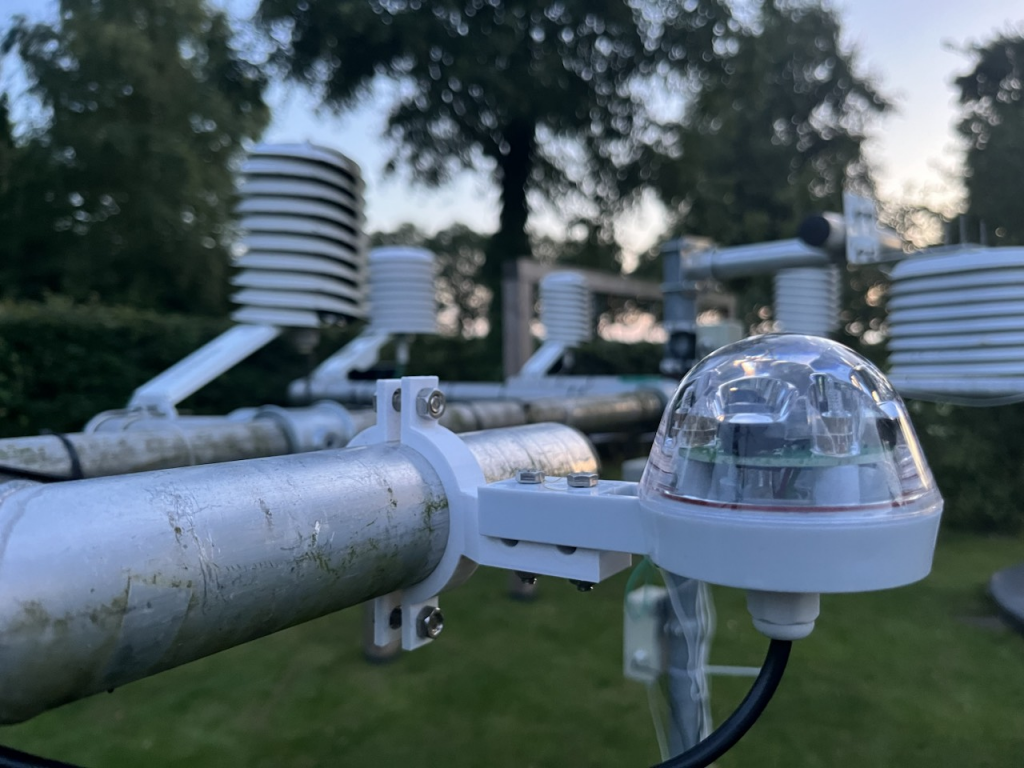
I have been running the Hydreon RG-15 for over a month now. In August I started out connecting my Wemos D1 Mini microcontroller to the J1 connector, but quickly switched to J2 for serial communication. Considering the listed “nominal accuracy” of 10%, my primary goal with this device was never to replace my Davis Instruments rain gauge. Nevertheless, this review looks into the accuracy of the RG-15 compared to a 6464M. One other thing bugged me maybe the most after installed the first of two RG-15’s.
False positives
One major concern I had with the RG-15 in my first period of testing was false positives. More than getting accurate estimates of total rain fall I want to use the sensor to detect the start and end of rain events. False positives are deadly for that purpose.
I was getting false positives during a very specific period of the day. Whenever it was sunny out, around solar noon I would get a small series of events during a 10-20 minute period. Moving the device around or orienting it differently did not solve the issue but it would result in the event time period changing slightly. My theory was that it had to be related to light from the Sun reflecting into the dome in some specific way.
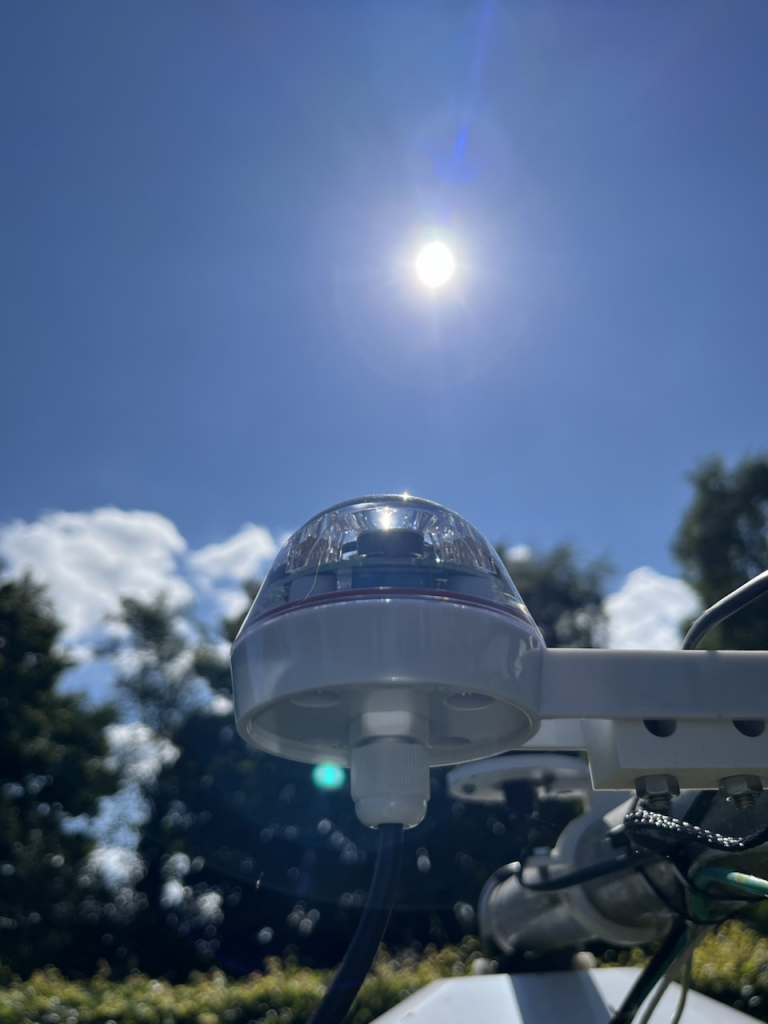
I got into contact with Hydreon and they sent me some helpful responses. The gist of it was that light may be reflecting off other components. Prime suspect was one of my anemometers which I have installed at roughly the same height.
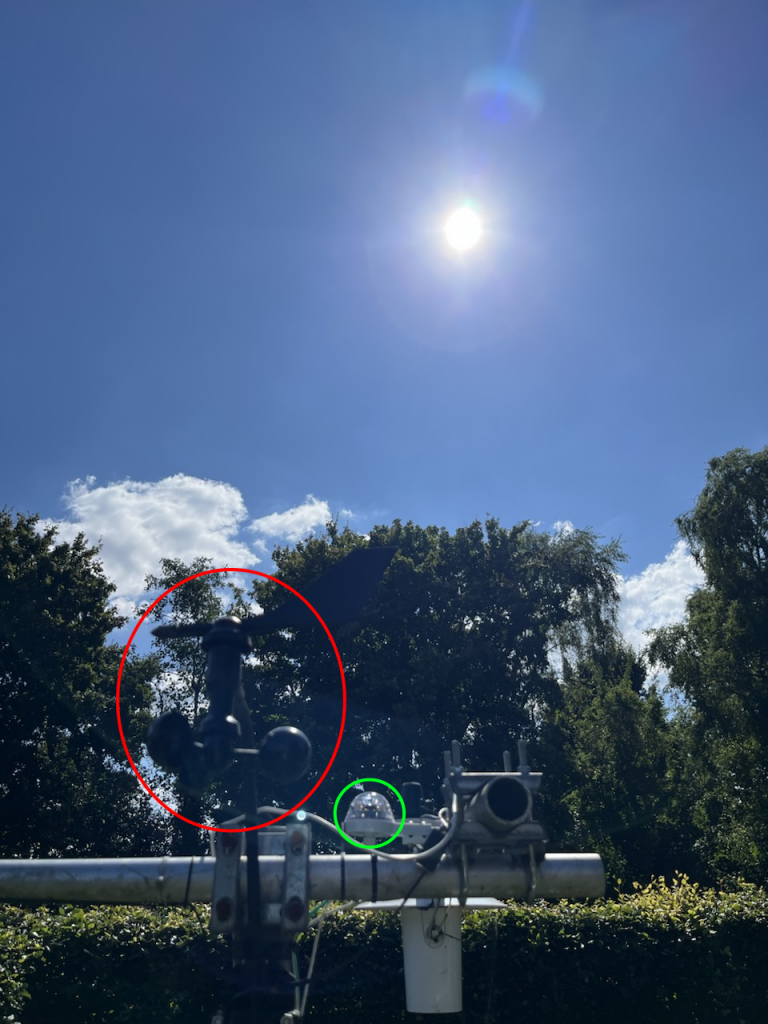
I moved the RG-15 around several times, and this did seem to have a positive effect on the number of false positives. But I never totally eliminated them. After installing a second RG-15 I also concluded that the issue was not a faulty sensor because both sensor will on occasion register an event when no rain is falling.
However, the nice thing about having 2 sensors is that I can verify rain events by checking the output of both. If one sensor detects something, but the other does not I can ignore the event. But if both sensors fire events, I can assume that is a lot less likely that it’s a false positive. By defining certain thresholds I can build in more certainty. For example, I may want to detect 2 events from both sensors before registering it as rain. I may miss out on the start of a very light drizzle, but I will still detect the rain events long before a tipping buckets tips for the first time.
Because from October onward it gets more troublesome to do false positive detection due to it drizzling a lot more often, I have suspending any search for eliminating them. Since it is unlikely to make sure they never occur at all, a setup with 2 sensors confirming each other seems the way to go anyway.
Accuracy
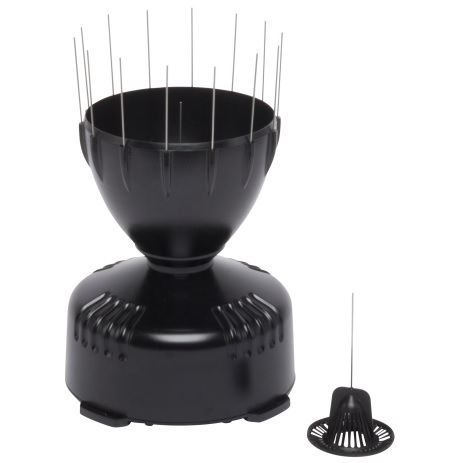
September was a good month to do accuracy testing. Many days saw significant amounts of rain. I start off comparing the Davis 6464M with a single RG-15.
Here are the results.
| Date | Davis 6464M | RG-15 Rain Sensor | RG-15 percentage |
| 01-09-2025 | 7.2 | 3.46 | 48% |
| 03-09-2025 | 1.4 | 0.61 | 43% |
| 04-09-2025 | 3.2 | 2.61 | 81% |
| 09-09-2025 | 15.6 | 20.7 | 133% |
| Average | 6.85 | 6.84 | 99.85% |
As you can see, the values are nowhere near the 10% “nominal accuracy” Hydreon mentions on their website. What I did find amusing is how the RG-15 values for these 4 measurement dates were all over the place, but when you average them out it detected virtually the same amount of rain as the Davis. This has to be a coincidence for sure.
As of September 11th, I installed the second RG-15 sensor I mentioned to do additional comparisons and exclude that any issues exist with a faulty sensor.
| Date | Davis | RG-15 A | RG-15 A % | RG-15 B | RG-15 B % |
| 11-09 | 4.8 | 6.18 | 129% | 4.29 | 89% |
| 12-09 | 3.6 | 5.81 | 161% | 1.85 | 51% |
| 13-09 | 7.8 | 9.76 | 125% | 4.05 | 52% |
| 14-09 | 4 | 6.85 | 171% | 2.77 | 69% |
| 15-09 | 6.2 | 11.42 | 184% | 7.62 | 123% |
| 16-09 | 11.4 | 22.64 | 196% | 19.51 | 171% |
| 17-09 | 3.4 | 3.83 | 112% | 2.87 | 84% |
| 18-09 | 2.6 | 2.43 | 93% | 1.65 | 63% |
| 20-09 | 5.6 | 7.57 | 135% | 7.02 | 125% |
| 21-09 | 0.8 | 1.44 | 180% | 1.30 | 163% |
| Average | 5.02 | 7.73 | 154% | 5.29 | 105% |
It is safe to conclude that the RG-15 in my setup is nowhere in terms of accuracy. Interestingly, though the second RG-15 never once comes within 10% of the Davis, the overall average over this period is only 5% off. This does make me wonder if long term sums might nog be entirely useless.
A series of days follows, 22 through 26 september, where the Davis registers no rain.
| Date | RG-15 A | RG-15 B |
| 22-09 | 0.38 | 0.11 |
| 23-09 | 0.01 | – |
| 24-09 | 0.01 | 0.01 |
| 25-09 | – | – |
| 26-09 | 0.05 | 0.04 |
The data for the 22nd is an example of total rain amount not reaching the threshold where the Davis tips. All events happened between 05:42 and 05:49. A short shower where both RG-15’s detected rain.
September 23 may be a false positive, I am not sure. It was registered at 17:38, which is not a typical time of day where false positives were normally detected. The same applies to September 24. Both sensors detected 0.01mm, but at different times of the day: 10:32 and 15:25. These would be typical situation where I would not assume a rain event because both RG-15’s are not backing each other up.
At first glance, September 26th is a great example of a short shower that the Davis will never register. Both RG-15’s fired several events between 23:42 and 23:59. This is just before midnight and the rain event carries on into September 27 and continues steadily for 2 hours. The Davis eventually does register this event for a total of 0.6mm at the end. The first rain detection occurs at 00:52. So it takes more than 1 hour of very light rain before anything is registered. A great example of the use of the RG-15. If I were to write a bit of code to exclude both September 23rd and 24th as false positives (which is easily done) the result is that the setup detected 2 days of real rain events that go unnoticed when only the Davis rain gauge is used.
Conclusion
If you’re interested in somewhat accurate readings to replace a tipping bucket system, the RG-15 is mostly useless. The results are just too erratic. However, if the reason for using the RG-15 is a mechanism to detect the start and the end of rain events, it’s a very useful device. Especially if you combine two of them you can avoid false positives. The rain intensity value won’t tell you exactly how much rain is falling, but it can serve as a way of assigning an intensity rating to a rain event. Especially at the lower end like during light drizzles, the tipping bucket is pretty much useless because there can be significant time between tips. Here too a second RG-15 is useful. Averaging the intensity ratings of both sensors is more likely to give a realistic estimate.